
The research group maintains the following research projects at different stages of development:
Electrochemical data processing software (Tto®)
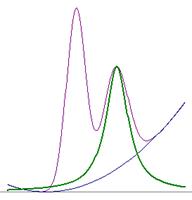 The Tto electrochemical data processing software is being developed as a voltammogram representation program because in the Group’s research laboratory we have several measuring equipment and each of them uses a different data file format. If you want to compare data obtained in different equipment, it is necessary to dump the data to treatment programs (Excel®, Origin®, SigmaPlot®, …) by importing them. Then, it’s necessary the cleaning of headers and other complementary data existing in the file; taking into account, also, the units used for the potentials and intensities in each type of file. Tto avoids all this tedious work by reading directly files of equipments from up to 8 different manufactures (not only electrochemical) and also incorporates advanced data processing.
(+Info)
Synthesis and physico-chemical characterization of new surfactants (TENSIO)
 The use of surfactants is increasingly widespread in different areas of our lives and new molecules whose properties are more refined and well characterized are needed. In this sense, and in collaboration with the University of Seville, surfactants are synthesized with new hidrophilic groups, with modified hydrophobic chains or gemini systems. Each one is characterized by measuring its properties (for example its critical micellar concentration or the aggregation number, among others) or through the quantification of the effect produced by its addition in different systems (variation of surface tension, miscibility in mixed systems, zeta potential, stability of emulsions, etc).
Desing of spectro-electrochemical flow detectors (SEC-FD)
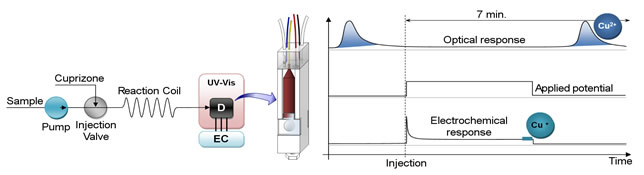
We had developed and tested our own desing of a mixed detector for FIA techniques in our laboratories. This development has already generated the publication of two articles and a thesis.
Micro-controlled flow. Syringe pump system (uCF·SPS)
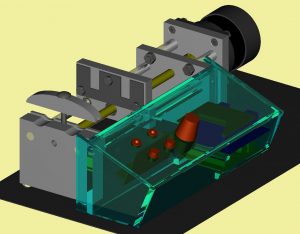 Pumping system controlled by an Arduino microprocessor. The system has a double syringe capable of providing isocratic flows from 8 mL/s to 0.3 µL/s with a precission greater than 0.03% (using two syringes of 10 mL). It is fully programmable, it can be used independently or in remote mode from a control computer (USB connection), it can generate gradients and synchronizing with other pumping or flow systems. All the technical information is available on the web because it is an open source technology.
(+ Info)
This project is an iniciative of the Open Source Hardware Group of the University of Huelva and their comprehensive project OpenFIA.
Desing of polymeric active membranes to surfactants (ISEmeter)
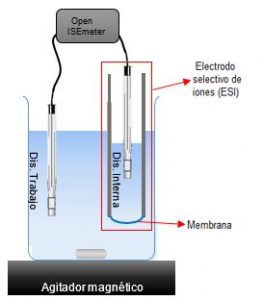 This research is realized in collaboration with the University of Seville. It consists of the synthesis of PVC-based membranes doped with specific ionic carriers to provide them with activity against anionic and cationic surfactants. This membranes are useful for measuring the free concentration of these surfactants in solution by high precision potentiometric techniques. Through these measures it can be calculate the equilibrium and kinetic constants values for host-guest processes between such surfactants and the interface of some micro-heterogeneous systems (nanoparticles, nanotubes, micelles, macromolecules, …).
Design of sensors with modified-surface electrodes (Sensors)
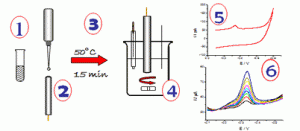 This project is developed in collaboration with the University of Chile. The electrode surface is modified to improve the detection level and other operative caracteristics in potentiometric and/or amperometric systems. Metallic or carbon nanostructures, chemical mediators or both are used as modifiers. They can be anchored by molecular forces, chemical reaction of mechanical fixers with high viscosity and adherence.
The target reagents for these sensors should have high pharmacologic, environmental, agricultural or food interest.
Kinetic and thermodynamic analysis of Host-Guest interactions (Host-Guest)

Study of redox behavior of pharmacologic and/or environmental compounds (Molec Redox)
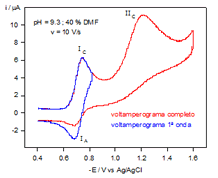 It is realized in collaboration with the University of Chile. In this project we analyze the electrochemical behavior of antibiotics, antiagings, antitumorals, herbicides, insecticides, … in a wide variety of conditions to elucidate their actuation mechanism. This would help to determine the conditions to reach their highest effectiveness, to minimize the overdosses risk, to eliminate the secondary effects, etc.